
There are two ways: Deliver a rapidly growing economic pie or reform GST and close corporate tax loopholes, suggests T N Ninan.

Former CAG Rajiv Mehrishi says Centre has held back a report he submitted to the President, to end what he called "a nightmare of accounts that militates against good governance".

7 key areas that the Budget must address to re-energise the infrastructure sector, suggests Vinayak Chatterjee.

The former finance minister also criticised Prime Minister Narendra Modi over the words he chose to attack his predecessor Manmohan Singh, saying he should remember that the Chair he sat on was used by Pandit Jawaharlal Nehru and even Atal Bihari Vajpayee and hence he should use right language.

As the FM said, this is a Budget that lays the foundation for the next 25 years, observes Kumar Mangalam Birla.
The government's decision to release the reports comes two days after over 200 scholars from across the globe issued a statement demanding release of all withheld reports produced by the NSO, including the household consumer expenditure survey that was junked.
Finance Minister Nirmala Sitharaman will present the much-awaited 2022-23 Union Budget on February 1. While there has been strong recovery in some sectors, touch services like hospitality, tourism and leisure continue to suffer after two Covid-19 waves. Household savings have been hit due to increased spending on health care. Consumption has still not reached pre-pandemic levels.
Despite unprecedented levels of uncertainty in Samvat 2077, investors have little to complain about on the returns front. The BSE Sensex delivered returns of 38 per cent in this period, while the Nifty registered a return of over 40 per cent. As is the case in bull markets, companies in the small- and mid-capitalisation basket outperformed the benchmarks, with returns almost twice those of frontliners.

I got to know that every referred case for angiography and angioplasty got a kickback of Rs 5,000 and Rs 15,000 respectively. Seeing this trend, doctors started paying referring doctors Rs 1 lakh in advance and adjusting it as and when patients came in. This menace slowly spread its tentacles all over the medical field, including radiological diagnostics and biochemistry laboratories. For every test ordered, 20 per cent of the bill was given back to the referring doctor. This led to doctors recommending unnecessary tests. The pharmaceutical companies also saw burgeoning business. Acclaimed doctors were given televisions sets, refrigerators, air conditioners and cars depending upon the prescriptions. General practitioners would prescribe unnecessary drugs, and were given returns in cash. A fascinating excerpt from Dr Upendra Kaul's When The Heart Speaks.

60-65 per cent of the FMCG industry's overall sales come from urban areas; 35-40 per cent from rural areas.

India's economy, estimated to contract by 6.9 per cent in 2020 due to the coronavirus pandemic, is forecast to record a "stronger recovery" in 2021 and grow by 5 per cent, according to a UN report which said the country's current fiscal year budget points to a shift towards demand-side stimulus, with an uptick in public investment. The report, 'Out of the frying pan ...Into the fire?' published Thursday as an update to the Trade and Development Report 2020 by UN Conference on Trade and Development (UNCTAD) said the global economy is set to grow by 4.7 per cent this year, faster than the 4.3 per cent predicted in September 2020, thanks in part to a stronger recovery in the US, where progress in distributing vaccines and a fresh fiscal stimulus of $1.9 trillion are expected to boost consumer spending.
Corporate leaders said a stable government at the Centre will help boost infrastructure spend, address agricultural distress, and encouraging employment.

People have developed a fatalistic attitude where they believe that anything can happen. They think, 'there's no medicine, no beds in the hospitals, what are we alive for?' And when you get that kind of an attitude, you stop taking precautions

The culture of freebies burdens coming generations with the huge bill for the flagrant abuse of power by preceding governments, points out Virendra Kapoor.

'The road ahead for the government's fiscal management will be full of many new challenges,' warns A K Bhattacharya.

Ajit Gandhi explains how healthy habits adopted during the pandemic can help us lead a healthier and environment. friendly lifestyle.

Managing your money in January will set the trend for rest of the year, says Adhil Shetty.

While the five years of the Modi government have indeed seen a healthy increase in PSUs' outlay and the Budgetary support for them, the next year's numbers reveal the squeeze in the government's own resources even though it is expecting a much higher dividend income from the PSUs. These do not augur well for the PSUs in 2019-20 and the years ahead, unless these numbers are revisited and, hopefully, revised in the full Budget that will be presented later in July this year, says A K Bhattacharya.
While the five years of the Modi government have indeed seen a healthy increase in PSUs' outlay and the Budgetary support for them, the next year's numbers reveal the squeeze in the government's own resources even though it is expecting a much higher dividend income from the PSUs. These do not augur well for the PSUs in 2019-20 and the years ahead, unless these numbers are revisited and, hopefully, revised in the full Budget that will be presented later in July this year, says A K Bhattacharya.

'India's sizeable foreign exchange reserves should serve as a buffer.'

'At this point, neither the army or the IAF has that immediate, punitive deterrent power against Pakistan.' 'Forget a three-week war; on the LoC, where the action is, Pakistan has until now fielded better infantry weapons, body armour, sniper rifles, and matching artillery' points out Shekhar Gupta.

The global COVID-19 situation, rollout of vaccines, geopolitical trends, Union Budget and economic recovery would be the major factors driving investor sentiments in 2021 after a tumultuous year which saw both 'the worst of times and the best of times' for the stock market, said analysts. What a year 2020 turned out to be! From witnessing gigantic losses to record-shattering gains, investors went on a roller-coaster ride amid the coronavirus pandemic and massive stimulus measures. Markets closed 2020 with remarkable gains of around 16 per cent, but will the winning ways continue in 2021 as well?

Good intentions and elaborate roadmaps apart, there is an urgent need for the Tamil Nadu chief minister to come up with branded schemes like MGR's meal scheme, asserts N Sathiya Moorthy.
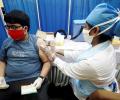
The cost of not vaccinating the entire population quickly will be far higher than bearing the entire cost of vaccination, points out Prosenjit Datta.

In less than an hour, seven of the top 10 India trends were fuelled by wishes pouring in for Prime Minister Modi from different quarters.

Three key babus will make room for a new set of officers to carry the baton of Budget programmes.
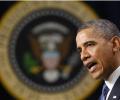
The United States is the worst affected country in the world from the coronavirus infection. There are 1.3 million coronavirus cases in the country and the death toll stands at 78,000.

The ripples from November 8 may be seen in next year's state budgets.

A combination of demonetisation, a poorly and hurriedly implemented GST, and more recently the "botched up" lockdown of the economy to control the spread of Covid has brought the economy to its knees.

'The increasing mix of fixed price contracts is helping us improve productivity by bringing in more automation.'

The spending on a typical RT-PCR test would take up 23 per cent of the monthly income of an average Indian, compared to 2 per cent in China. This is one of the deepest cuts in the pocket of an individual, in comparison to 14 other countries, reports Abhishek Waghmare.

There will be a huge market for healthcare professionals, data and security experts and digital marketers, says Navneet Singh, founder, Avsar HR Services.

Listening -- really listening -- to advisers in the government and outside would help. India has plenty of wise economists who have worked within the bureaucracy during previous crises, points out Rahul Jacob.

Senior bureaucrats say the government has planned a 'feel-good' Budget after the 'pain' of demonetisation.

Low consumer demand, a slide in investments and troubles in the banking sector should prompt the government to recalibrate taxes and expenditure. It is also important to ramp up spending on health care and education, says CII president Sumit Mazumder.

The Indian economy's election-year syndrome cannot be ignored, says A K Bhattacharya.

Few people know Ratan Tata as well as R K Krishna Kumar does. Widely perceived to be among the managers closest to Tata, Krishna Kumar assesses Ratan Tata, the man and business leader, in this exclusive interview to Rediff.com's Vaihayasi Pande Daniel.

'These reports of cases being very low in other states, is it true? Are the numbers believable?'
The budget-making exercise offers golden opportunities despite challenges, observes Shankar Acharya, former chief economic adviser to the Government of India.

The Nifty had crashed to a new 21-month low of 6,825 while the Finance Minister was speaking.
